Before the appointment
How to prepare for a vet appointment: a useful checklist.
Gathering a few things before you leave makes it easier to explain the situation clearly and avoids searching for a record at the last minute.
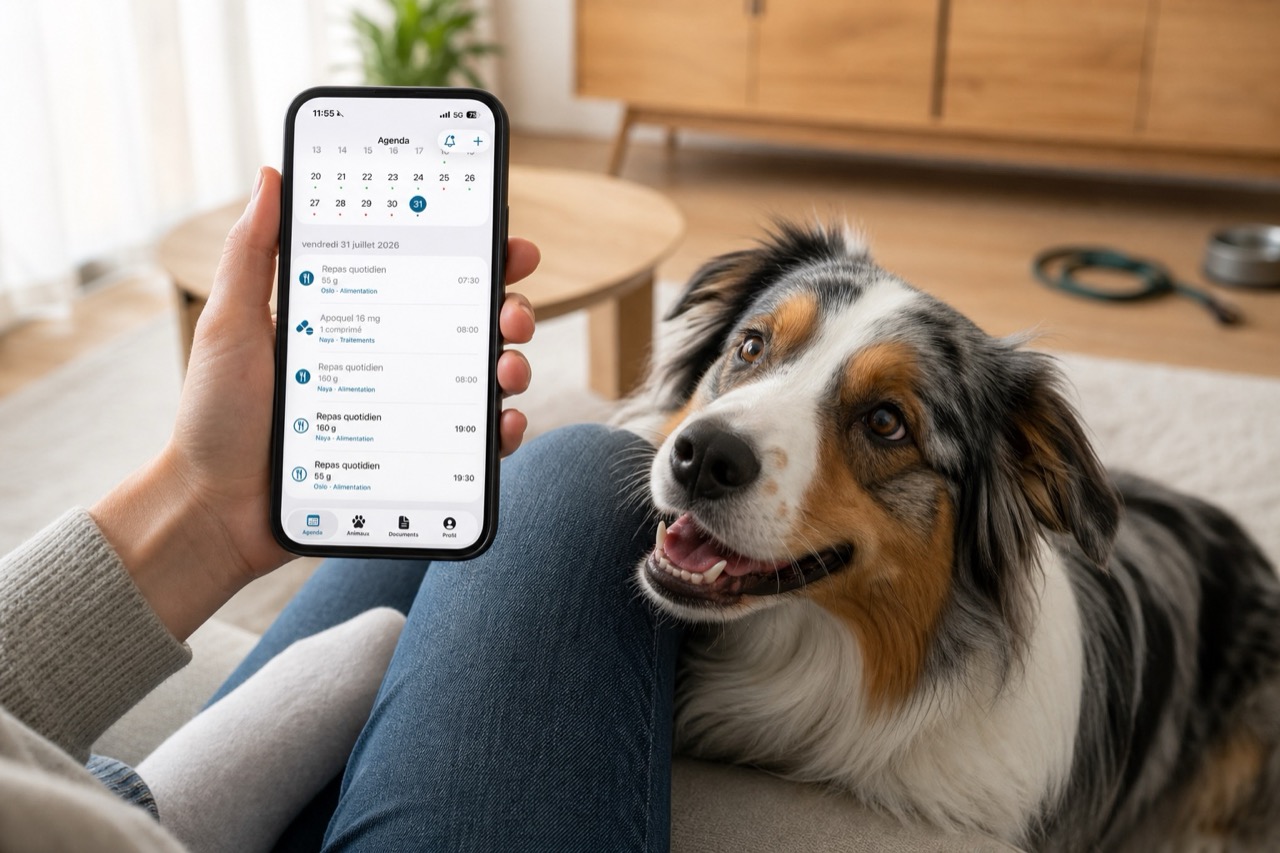
Preparation does not mean trying to diagnose your pet yourself. Its purpose is to give the veterinarian an accurate history, the records you have and the questions you want to ask.
1. Describe the reason in your own words
Record what you noticed without trying to name a disease: a change in appetite, discomfort, unusual behaviour, weight changes or a routine preventive check. Say when it started, whether it changes and what concerns you most.
A short timeline is more useful than reconstructing events in the waiting room.
2. Prepare a list of treatments and products
- the exact name of each medicine or product;
- the prescribed quantity and frequency;
- the start date and, if known, the end date;
- the times actually followed and any difficulty;
- recent food, supplements and parasite prevention.
The FDA recommends knowing the name, quantity, frequency and any relationship with meals, and keeping a list of your pet’s medication. Read the FDA guidance.
3. Gather relevant records
- vaccination record or known dates;
- current prescriptions;
- reports from another clinic;
- test or imaging results;
- photos or videos of behaviour that may be difficult to observe during the appointment;
- details of a previous veterinarian if records need to be transferred.
Official clinical records remain the responsibility of veterinary professionals. The Royal College of Veterinary Surgeons states that records should be detailed enough to support continuity and that relevant information should be passed on. Read the RCVS guidance.
4. Write down your three most important questions
Prepare the questions that matter most before you arrive. For example: what should you monitor, how should you follow the agreed plan and when should you contact the clinic again? If time is short, you will still have covered the essentials.
5. Consider your pet’s practical needs
Tell the clinic in advance about severe fear, handling difficulties, accessibility needs or known sensitivities. Ask them how to prepare for the journey or arrival; do not improvise calming medication.
6. Update the record afterwards
File the report and prescription, then record only the instructions given by the veterinarian: dates, times, quantities and next check. ANISENS lets you keep these details and documents with the right pet and create a summary from the information you entered.
Before you leave
- reason and timeline noted;
- treatment list updated;
- prescriptions and reports gathered;
- useful photos or videos available;
- three priority questions written down;
- carrier, lead or transport equipment ready.